The Fortune Cookie was actually Japanese
The fortune cookie feels inseparable from Chinese food.
It arrives without being ordered, snapped open at the end of a meal, delivering a vague prophecy or a lucky number. It’s so familiar that its origin seems obvious.
But the fortune cookie isn’t Chinese at all.
Its story begins somewhere else entirely, shaped by Japanese tradition, immigrant life in America, and a moment in history that rewrote cultural ownership.
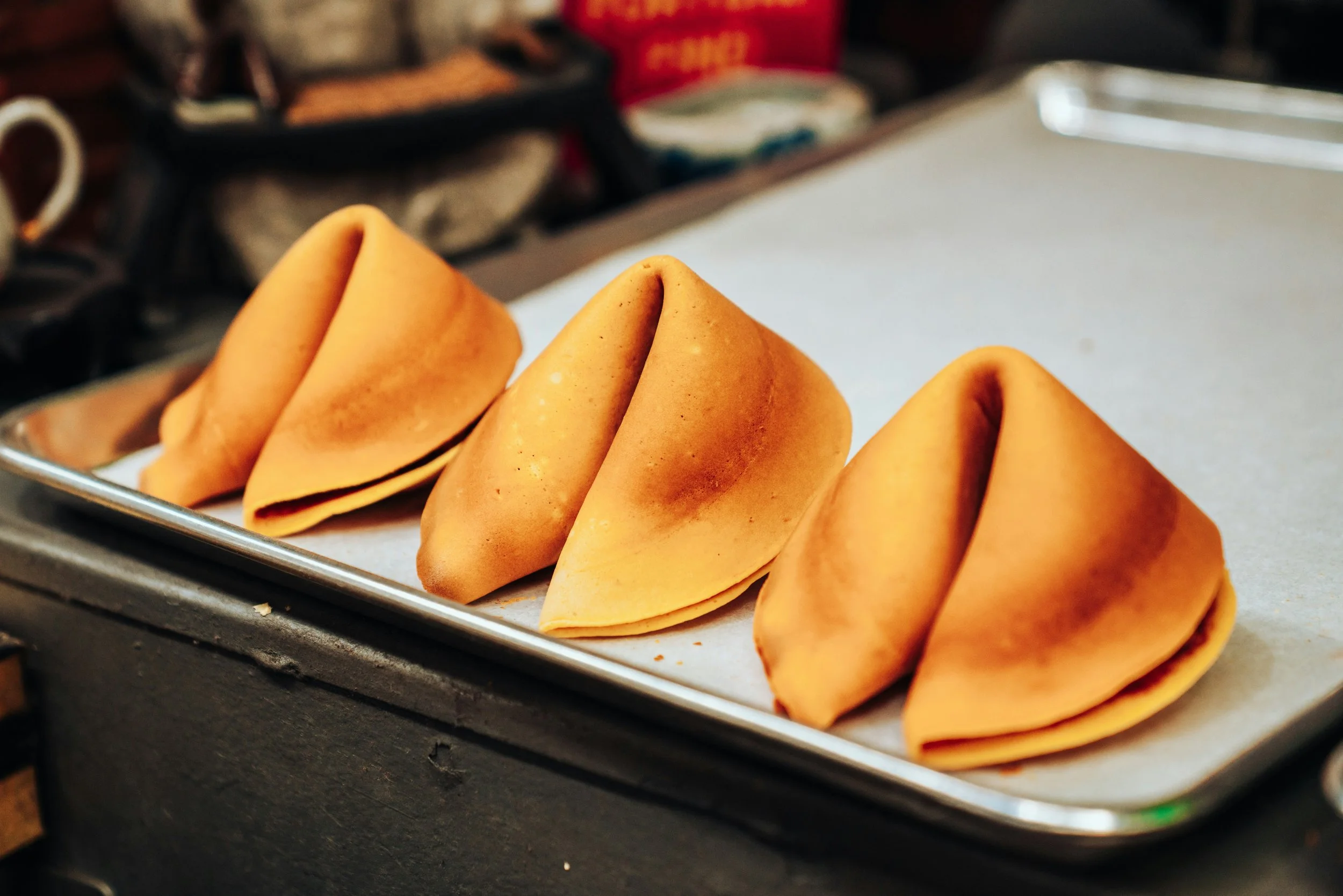
A Japanese idea, folded in sugar
Long before fortune cookies appeared in American restaurants, similar sweets existed in Japan. In the 19th century, Japanese confectioners made tsujiura senbei: dark, slightly savory crackers often sold near temples and shrines. Some contained small paper fortunes, either tucked into the fold or baked inside.
They weren’t identical to today’s fortune cookies, but the concept was unmistakable: a crisp, folded treat carrying a written message meant to be read after eating.
When Japanese immigrants arrived on the U.S. West Coast in the late 1800s and early 1900s, they brought this idea with them. Among many other traditions, they carried the notion that food could hold meaning…sometimes literally.
By the early 20th century, fortune-style cookies were already being made in California, primarily by Japanese immigrants.
One of the earliest documented examples comes from San Francisco. At the Japanese Tea Garden in Golden Gate Park, visitors were served thin, folded “fortune tea cookies” as early as the 1910s. They were handmade, lightly sweet, and filled with handwritten messages.
Around the same time, similar cookies began appearing in Los Angeles. A Chinese immigrant named David Jung is often mentioned in these accounts, and historians still debate who produced the very first fortune cookie in America. What’s far less disputed is this: Japanese Americans were making them earlier, and at scale.
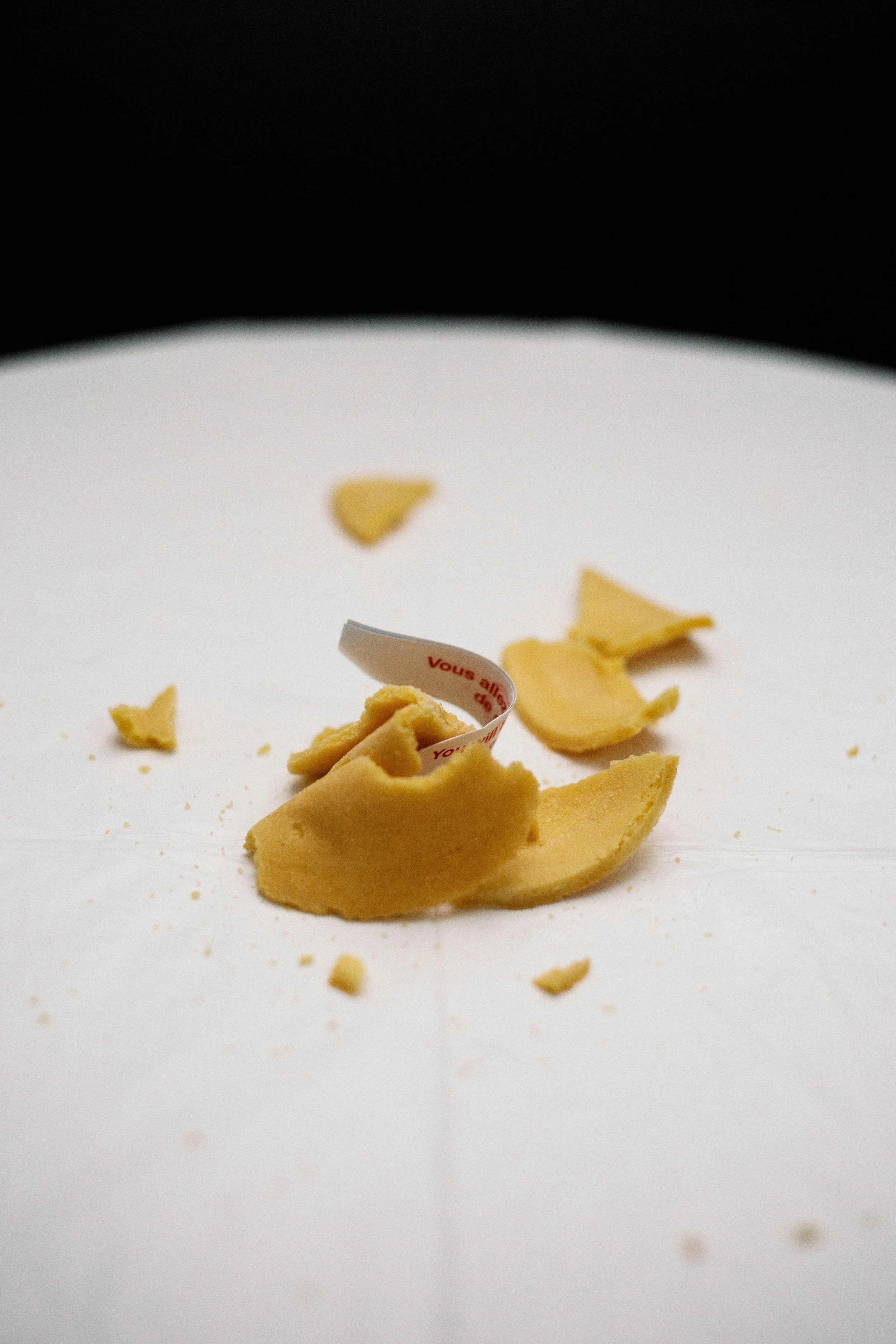
How the cookie changed hands
The fortune cookie’s association with Chinese restaurants came later, and largely by accident.
During World War II, more than 120,000 Japanese Americans were forcibly removed from their homes and businesses and placed in internment camps. Japanese-owned bakeries along the West Coast were shut down overnight, including those producing fortune cookies.
The demand didn’t disappear.
Chinese American restaurateurs, who were not subject to internment, stepped in to fill the gap. They took over production and began serving fortune cookies at the end of meals in Chinese-American restaurants.
Over time, the connection solidified. The cookie became a standard ending, then a tradition, and eventually a symbol, so familiar that its origin was no longer questioned.
A tradition that doesn’t exist where you expect it
Today, fortune cookies are almost nonexistent in China, where they’re often viewed as a Western novelty. In Japan, however, versions of tsujiura senbei are still sold near temples, quietly preserving the idea that inspired them in the first place.
The fortune cookie isn’t a historical mistake.
It’s something far more interesting.
It’s a cultural hybrid: born from migration, shaped by adaptation, and transformed by circumstance. A reminder that food doesn’t belong to one place forever. It travels with people, absorbs history, and sometimes tells a different story than we expect.
Just like the messages inside, its meaning depends on how closely you choose to look.