Red torii gates in Japan: beyond Kyoto
When people think of red torii gates in Japan, they usually think of Fushimi Inari Shrine in Kyoto.
The image of thousands of red gates climbing the mountain has become one of the most iconic representations of the country.
But red torii gates are not unique to Kyoto.
They can be found all over Japan, in very different contexts: in large cities, in rural areas, and even by the sea.
This article looks at what red torii gates represent and introduces three lesser-known places where you can experience them outside Kyoto.
What are red torii gates?
Torii gates mark the entrance to a Shinto shrine.
They represent the boundary between the everyday world and a sacred space dedicated to a kami (deity).
Passing through a torii is a symbolic act: it signals that you are leaving the ordinary behind and entering a place with spiritual significance.
This is why torii gates are often found at the start of shrine paths, sometimes forming long corridors that guide visitors toward the main sanctuary.
The red color is common at Inari shrines and is traditionally associated with protection and purification.
Red torii gates beyond Kyoto
While Kyoto is famous for its torii paths, there are many other places in Japan where red torii gates shape the landscape, often with fewer visitors and a very different atmosphere.
Below are three examples, each in a distinct setting.
Nezu Shrine (Tokyo)
Nezu Shrine shows that you don’t need to leave the city to experience a torii path.
Founded in 1705, it is one of Tokyo’s oldest Shinto shrines and is located in a quiet residential neighborhood.
Its torii gates are smaller and closer together than those at larger shrines, creating a narrow, enclosed walkway.
The shrine has traditionally been associated with prayers for love and marriage.
In spring, during azalea season, the grounds are known for their large number of blooming azalea bushes.
Nezu Shrine is easy to include in a Tokyo itinerary and works well as a calm contrast to the city’s busier areas.
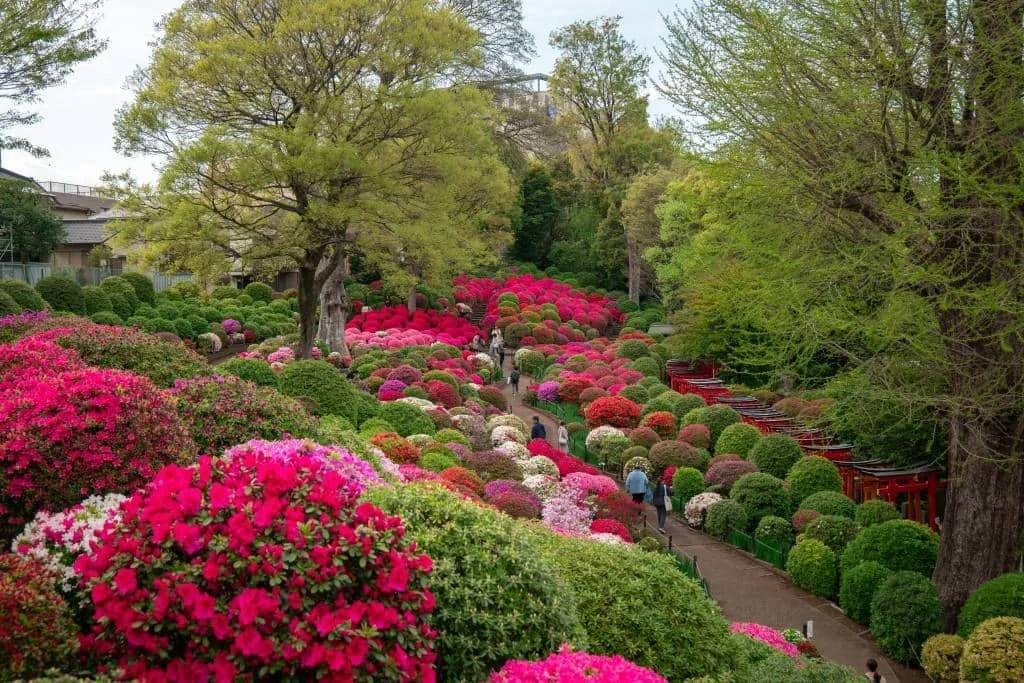
Image: tokyocheapo.com
Takayama Inari Shrine (Aomori)
Located in northern Japan, Takayama Inari Shrine is far from the main tourist routes.
The shrine is known for its long line of red torii gates arranged along a hill path.
Visitors can walk the full route in about 30-40 minutes, and from the upper part of the hill it’s possible to see the entire line of gates from above.
Public transport to the area is limited, so most visitors arrive by car or taxi.
Because of its location, the shrine is usually quiet and rarely crowded, making it a good option for travelers interested in less-visited parts of Japan.
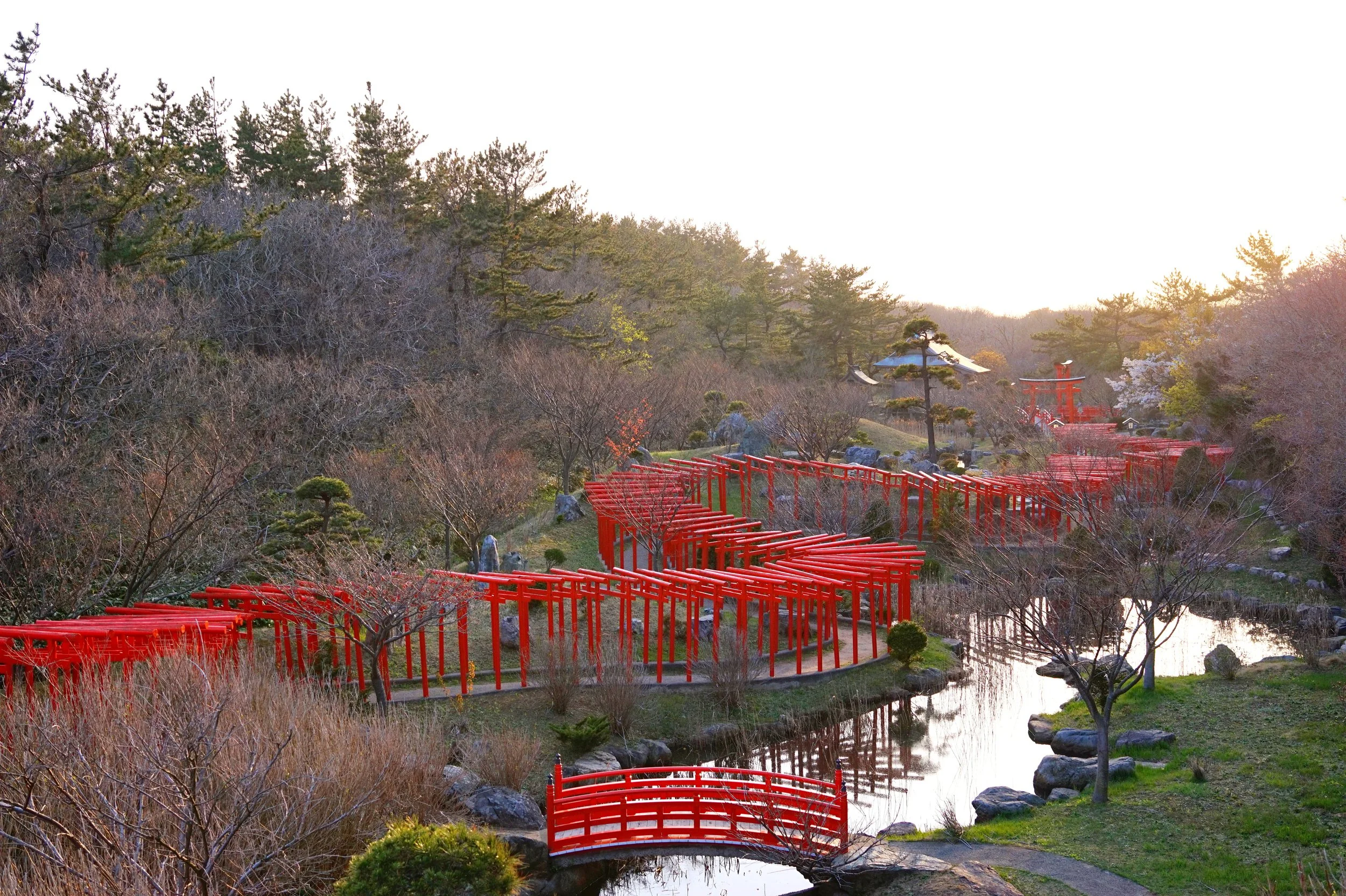
Image: wikipedia
Bentenjima Torii (Hamamatsu)
The Bentenjima Torii offers a completely different setting.
Here, a single red torii gate stands in the sea, marking the sacred space associated with Benzaiten, a deity linked to water, music, and good fortune.
The position of the torii reflects this connection to water and the natural environment.
Hamamatsu is a coastal city along the Tokyo–Kyoto route, making this an easy stop when traveling between the two.
The torii is best visited in the late afternoon, when changing light and sunset reflections alter the view.
Looking beyond the highlights
Kyoto remains an essential stop for many travelers, and Fushimi Inari is iconic for a reason.
At the same time, Japan’s red torii gates appear in many different forms and locations, each offering a distinct experience.
Looking beyond the most famous sites allows you to better match places to your route, pace, and interests, whether that means staying in the city, exploring quieter regions, or stopping along the coast.
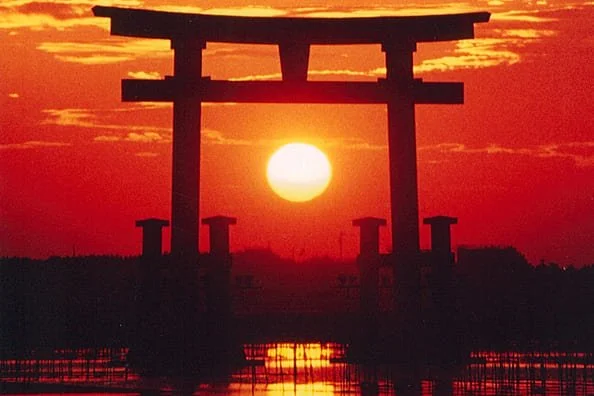
Image: inhamamatsu.com
Planning a trip to Japan?
When I plan itineraries for Japan, I focus on exactly this kind of balance:
combining well-known places with lesser-known ones that fit naturally into your trip.
If you’re planning a visit and would like help building a route that makes sense for you (including where and how to experience places like these) you can learn more about my Japan travel planning services on this site, or directly schedule a free call with me!